
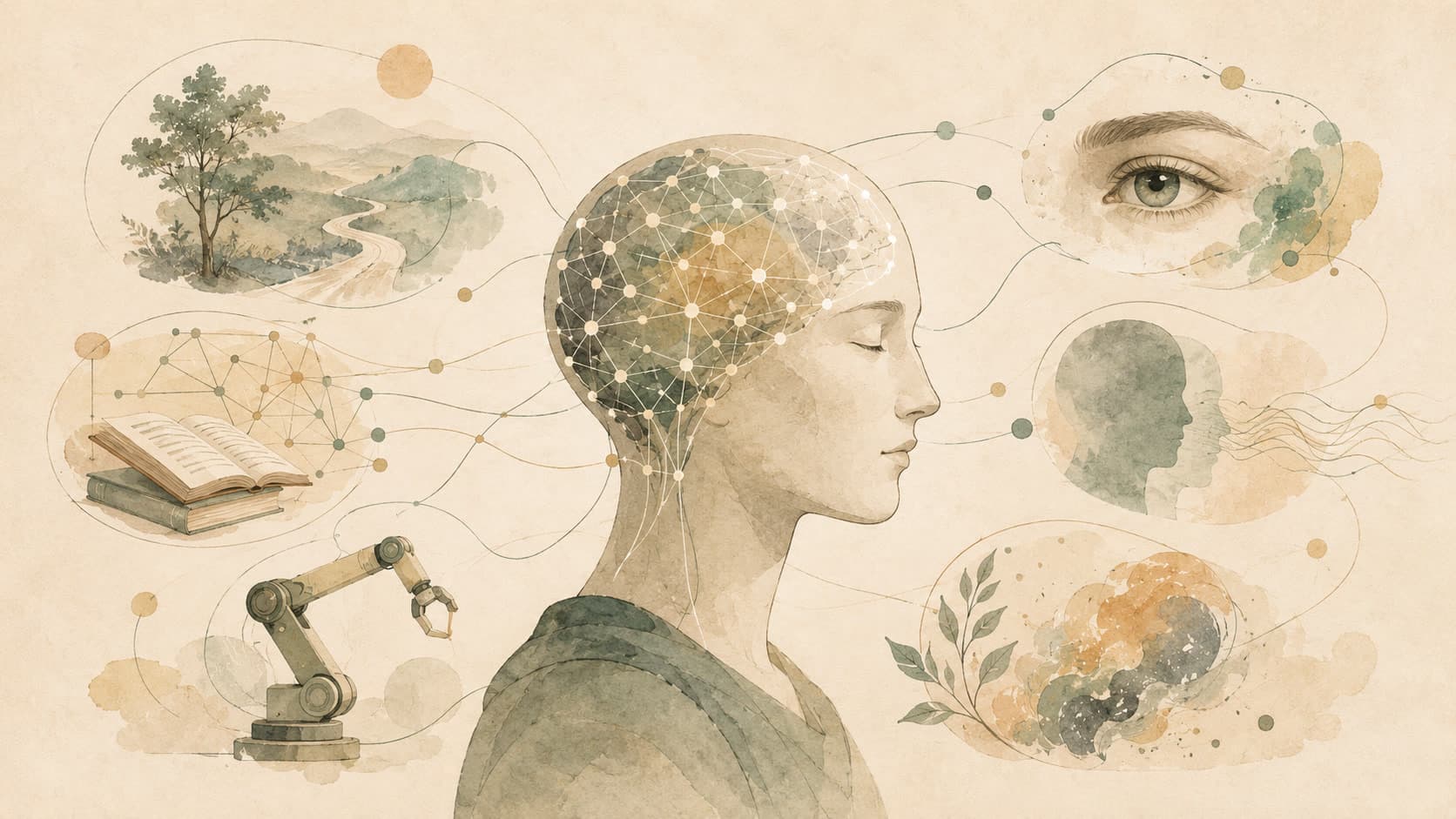
Artificial intelligence is the long umbrella under which every other term in this column rests. Once a philosophical project, it is now a pragmatic one — a stack of statistical methods that, taken together, behave a lot like reasoning.
In plain language
Most modern AI is not a thinking machine. It's a very large statistical model. You show it a lot of examples — sentences, photos, board-game moves, doctor's notes — and it learns the patterns inside those examples well enough to behave usefully on examples it has never seen before.
That sounds dry, but the consequences are big. The same basic recipe sorts your spam, recognises your face, suggests the next word you'll type, and writes a paragraph in the voice of a memo. The model isn't choosing to do those things. It's reaching for the next most likely answer, given everything it has read.
So when people say "the AI decided," what's almost always happening underneath is "a model picked the option with the highest probability." It feels like judgment from the outside, and that's the whole reason the term sticks.
An everyday picture
Imagine you've watched ten thousand cooking videos. You've never been to cooking school, you can't explain why caramelisation happens, but if someone hands you onions and a hot pan, you'll probably do something reasonable — because you've seen so many people do it before.
Modern AI works like that. It hasn't reasoned its way to an answer. It has watched a great many examples and learned to do something that looks reasonable next.
Where it shows up
AI is doing quiet work in places you don't really notice. It's deciding which photos in your phone are 'similar enough' to group together. It's reading the address you scrawled on a parcel. It's flagging a credit-card charge as suspicious. It's helping a radiologist look twice at a scan.
The newer, louder uses — chatbots, image generators, voice clones — get the headlines, but they sit on top of decades of these much smaller jobs.
A small example
You start typing an email in Gmail and the grey suggestion finishes your sentence for you. That tiny moment is the same family of technology as ChatGPT, just smaller and quieter.
Behind both is a model that has read more sentences than any person ever could, and learned what tends to come next. The autocomplete guesses three words ahead. The chatbot guesses three hundred. The underlying instinct is the same: keep picking the most likely next piece.
Common misunderstanding
One line to take with you
AI is mostly statistics worn well. Trust it for patterns; double-check it for facts.
Frequently asked
Machine learning is the part of AI that learns from examples. Most of what people call AI today is, technically, machine learning.