
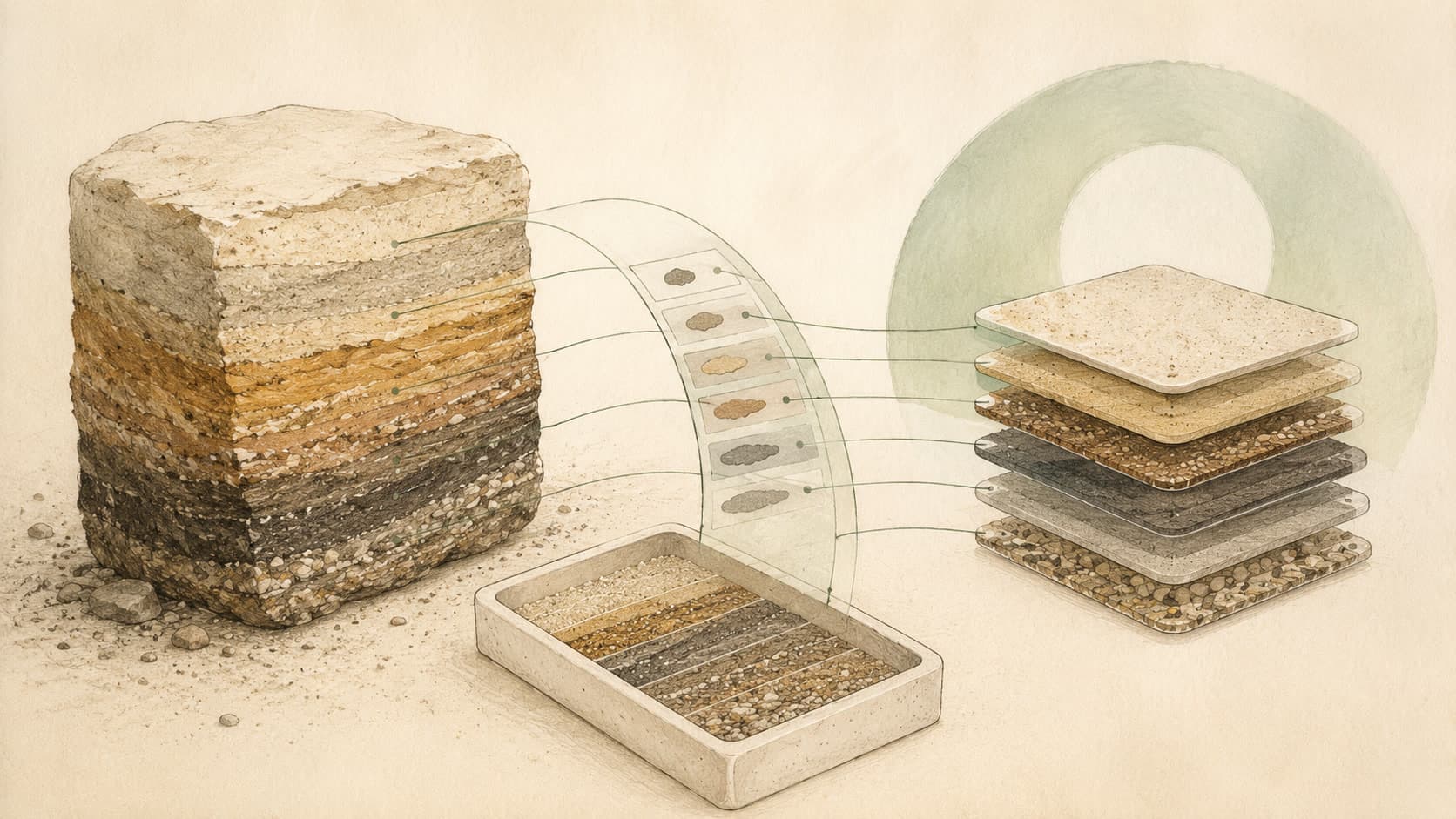
A schema is a promise the data makes to anyone who reads it: these are the fields, these are their types, this is what is required. Most data disasters are schema disasters in disguise.
In plain language
In data work, this term tends to appear once an organisation outgrows ad-hoc spreadsheets and starts thinking in pipelines and warehouses. A schema is a promise the data makes to anyone who reads it: these are the fields, these are their types, this is what is required. Most data disasters are schema disasters in disguise. If you are new to the field, the simplest mental model is this: the agreed-upon shape of a piece of data. Read it once with that frame in mind, then come back and read it again — that is usually enough for the rest of the entry to make sense.
An everyday picture
Think of Schema as the basement of a building: large, quiet, and where almost everything ends up being kept. The room upstairs is what people use; the basement is what makes the room possible.
Where it shows up
Schema lives behind dashboards, analytics tools, recommendation engines, and back-office reports. Most users never see it directly. The team that uses it is usually the one looking at numbers all day.
A small example
Imagine the scene above. The role Schema plays is the one its blurb describes — The agreed-upon shape of a piece of data. When last night's sales numbers arrive in a dashboard this morning, ideas like this are part of the pipework that moved them.
Common misunderstanding
One line to take with you
Schema is leverage on what you already have. Shape the data well and the rest gets easier on its own.