
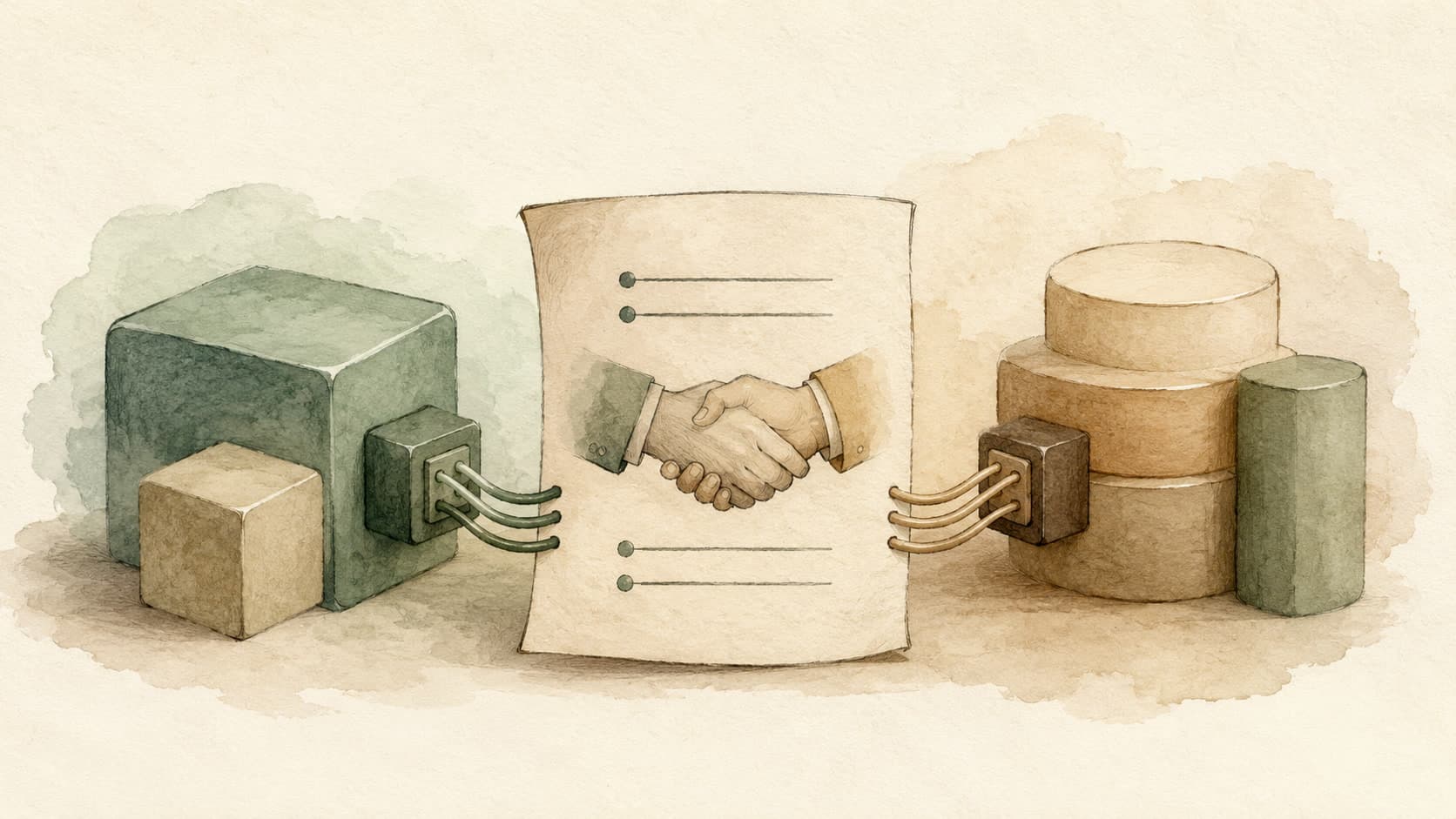
- An API is a set of rules that lets two different software programs talk to each other and share data.
- APIs are everywhere. When you log into a website with Google, pay online, or check the weather in an app, an API is at work.
- You don't need to be a developer to benefit from APIs; they power the everyday digital tools that businesses and consumers rely on.
What is an API?
An API, which stands for Application Programming Interface, is a set of rules and protocols that allows one piece of software to communicate with another. In simpler terms, an API is like a messenger or a translator that lets two different apps share information without needing to know each other's inner workings.
APIs are one of the most fundamental building blocks of modern technology, yet most people use them dozens of times a day without ever realizing it.
A Real-World Analogy
Imagine you are sitting at a restaurant. You are the customer (one app), and the kitchen is the server (another app). The waiter is the API.
You don't walk into the kitchen and cook your own food. Instead, you tell the waiter what you want, the waiter goes to the kitchen, the kitchen prepares it, and the waiter brings it back to you. You never see what happens behind the kitchen doors; you just get your meal.
An API works exactly the same way. When you open a weather app, it doesn't generate weather data itself. It sends a request to a weather service's API, which fetches the data and sends it back, all in a few milliseconds.
Why Does an API Matter?
APIs matter because they allow developers to build powerful applications faster by reusing existing services, rather than building everything from scratch. For business owners and everyday users, APIs mean:
- Convenience: Features like "Sign in with Google" or "Pay with PayPal" work because of APIs.
- Integration: Different tools can plug into each other, so your e-commerce store can connect to a shipping tracker, a payment processor, and an email service all through APIs.
- Innovation: Startups can build powerful products by combining existing APIs, without needing to build a bank, a map service, or a messaging system from the ground up.
APIs also allow companies to safely share data with outside developers without giving them full access to their systems.
How Does an API Work?
Most modern APIs use a format called REST (Representational State Transfer) and communicate over the internet. Here is a simplified breakdown:
- Request. Your app sends a request to the API. This request includes what action you want (get data, send data, update something) and any required details.
- Processing. The API receives the request, checks if it is valid, and asks the server to carry out the action.
- Response. The server sends back the result, typically as a structured data format called JSON (JavaScript Object Notation), which is easy for apps to read.
Think of it like filling out a form online: you fill in the blanks (your request), submit it (the API call), and get a confirmation or result back (the response).
APIs usually require an API key, a unique code that identifies who is making the request, to keep things secure and prevent abuse.
Common Examples of APIs in Everyday Life
| Situation | What's Happening Under the Hood |
|---|---|
| Logging in with Google | The website calls Google's API to verify your identity |
| Booking a flight | The travel site queries airline APIs for availability and prices |
| Checking weather in an app | The app calls a weather data API (e.g., OpenWeatherMap) |
| Paying online with Stripe | The checkout calls Stripe's payment API to process your card |
| Embedding a map on a website | The site loads Google Maps or Mapbox via their map API |
Every single one of these experiences depends on an API quietly doing its job in the background.
Key Takeaway
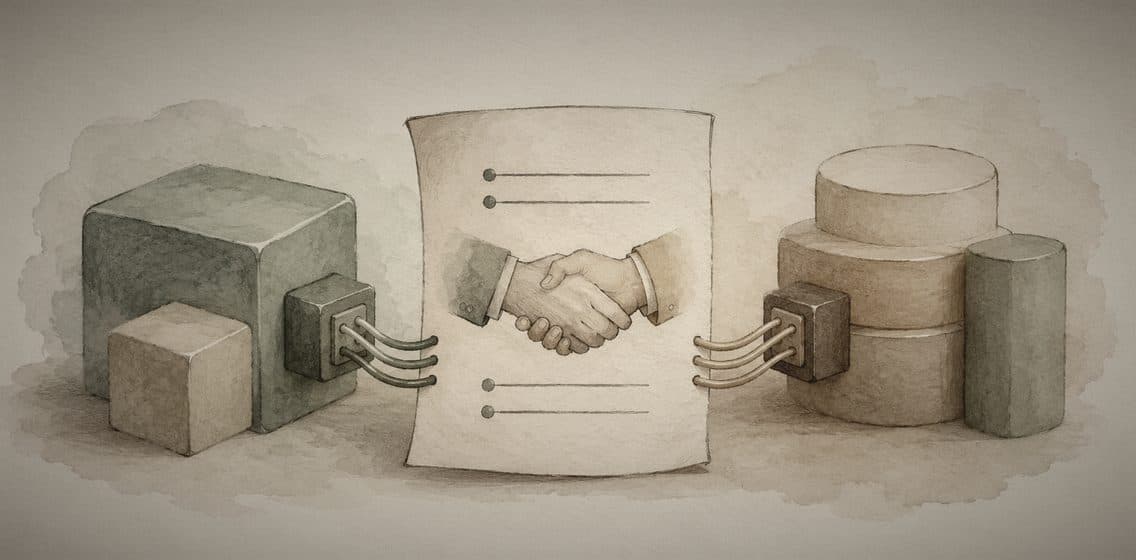
An API is a digital handshake between two apps. It defines how they ask questions, share answers, and work together, without either app needing to understand the other's inner code. APIs make the connected, convenient internet experience we all rely on possible.
Whether you're a small business owner integrating a payment system, a developer building a new product, or just a regular user logging in somewhere new, APIs are working behind the scenes to make it happen.
Related Terms
- SaaS, Software delivered over the internet as a subscription service, often built on top of APIs.
- Cloud Computing, The infrastructure that hosts the servers and services that APIs connect to.
- Open Source, Many popular API frameworks and tools are open source, meaning anyone can use or improve them.
- Machine Learning, AI services are often exposed to developers through APIs, making intelligence accessible to any app.
- JSON, The most common data format used to send and receive information through APIs.
Sources
- Red Hat, "What is an API?": A widely cited overview of API concepts and types used in enterprise software. (redhat.com)
- MuleSoft, API Glossary: Explains REST, API keys, and integration patterns for business and technical audiences. (mulesoft.com)
- MDN Web Docs, Introduction to Web APIs: Mozilla's beginner-friendly guide to APIs in web development. (developer.mozilla.org)
Frequently asked
No. A website is built for a person to read in a browser, while an API is built for another program to call. The same company often offers both: the website is the front door for people, and the API is the side entrance other software uses to fetch or send data. They may share the same underlying systems, but they are aimed at different audiences.
Not at all. Every time you sign in with Google, pay through a checkout button, see a map inside an app, or get a delivery tracking update, an API is doing the work behind the scenes. You never call it directly, but the convenient, connected experiences you use every day are stitched together from APIs. Knowing what an API is simply helps you understand why so many apps can work together so smoothly.
No. REST is the most common style for web APIs today, but it is not the only one. GraphQL lets an app ask for exactly the fields it needs in a single request, gRPC is built for fast service-to-service communication, and webhooks let a service notify your app the moment something happens instead of waiting to be asked. They are all members of the same family: agreed-upon ways for one program to talk to another.