
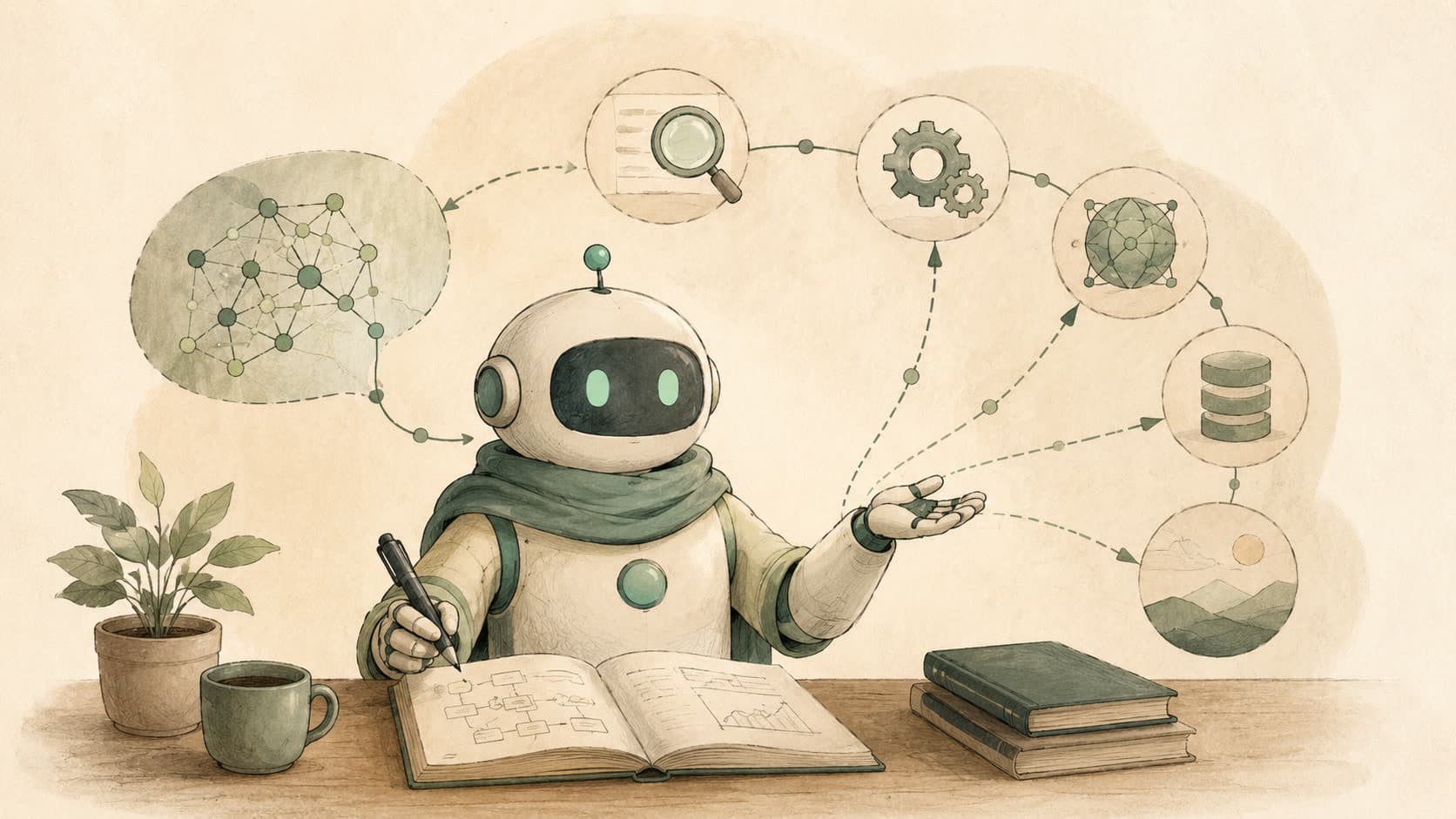
An agent is what you get when you give a language model a loop, a set of tools, and a goal. It thinks, acts, observes, and thinks again — a small autonomous worker built out of prompts and APIs.
In plain language
A plain chatbot answers once and stops. An agent keeps going. Given a goal — 'book me a flight under 400 dollars' — it breaks the goal into steps, uses tools it has access to (a search API, a booking API, your calendar), and re-plans when something goes wrong. The intelligence is mostly in the loop, not the model alone.
An everyday picture
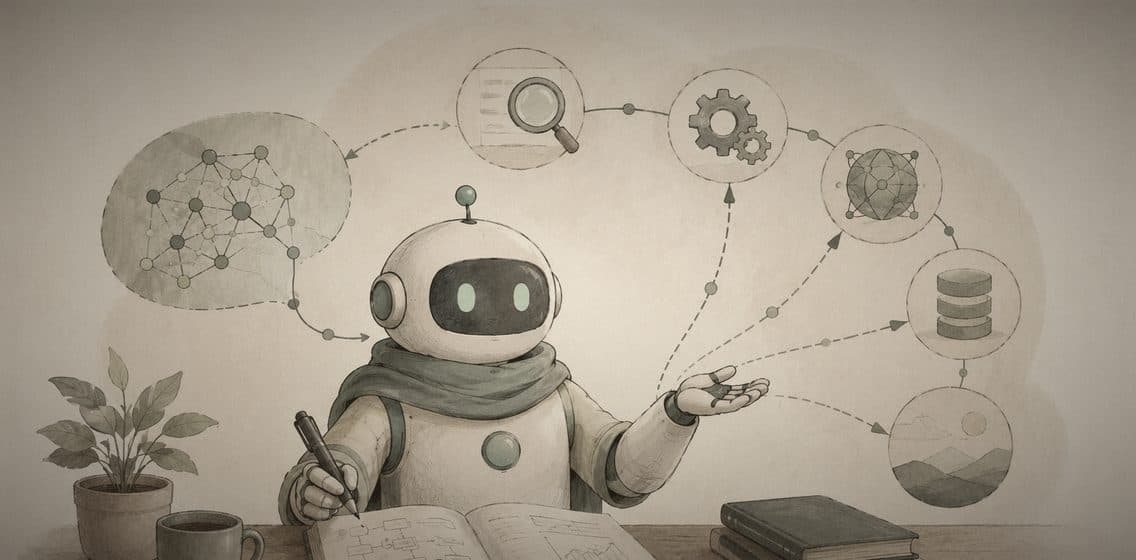
Think of AI Agent less like a thinking person and more like someone who has read an enormous amount and now finishes other people's sentences for a living. They have absorbed the shape of the work; they have not memorised any one page.
Where it shows up
AI Agent tends to sit inside products that need to read, write, or recognise without a hard-coded rule — assistants, search, document tools, voice apps. It is rarely the only moving part, but it is often the part the user feels.
A small example
Claude Code is a coding agent: given a bug report, it reads files, runs commands, edits code, runs tests, and adjusts — repeating until the test passes.
Common misunderstanding
One line to take with you
AI Agent is statistics worn well. Useful for patterns; double-check it for facts.