
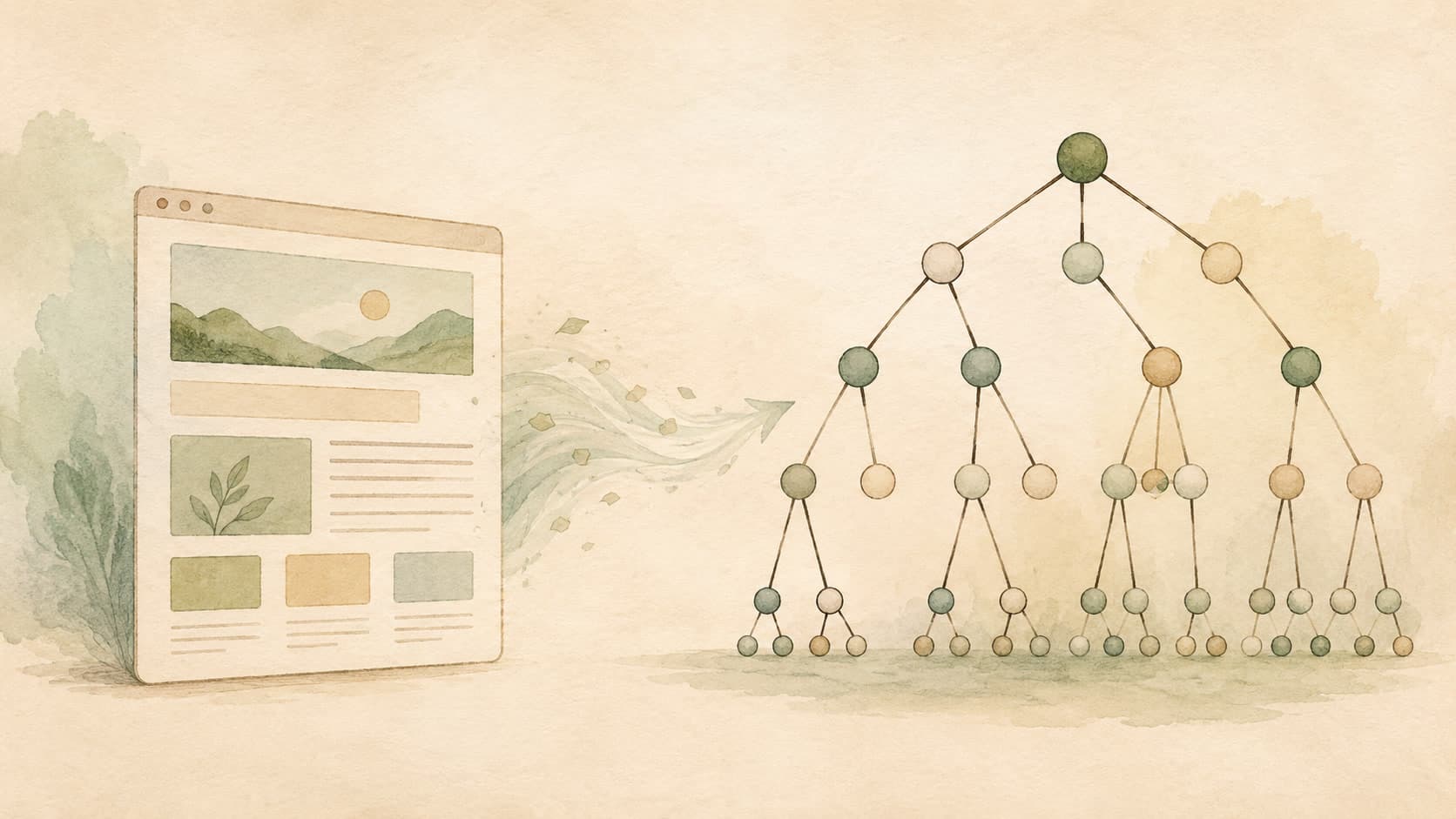
The DOM is the page after the browser has read it: a tree of nodes you can inspect and mutate. Every framework is, at heart, a more pleasant way to edit it.
In plain language
On the web, this term comes up when people talk about how pages, apps, and services are built or connected. The DOM is the page after the browser has read it: a tree of nodes you can inspect and mutate. Every framework is, at heart, a more pleasant way to edit it. If you are new to the field, the simplest mental model is this: the live, in-memory tree of a web page. Read it once with that frame in mind, then come back and read it again — that is usually enough for the rest of the entry to make sense.
An everyday picture
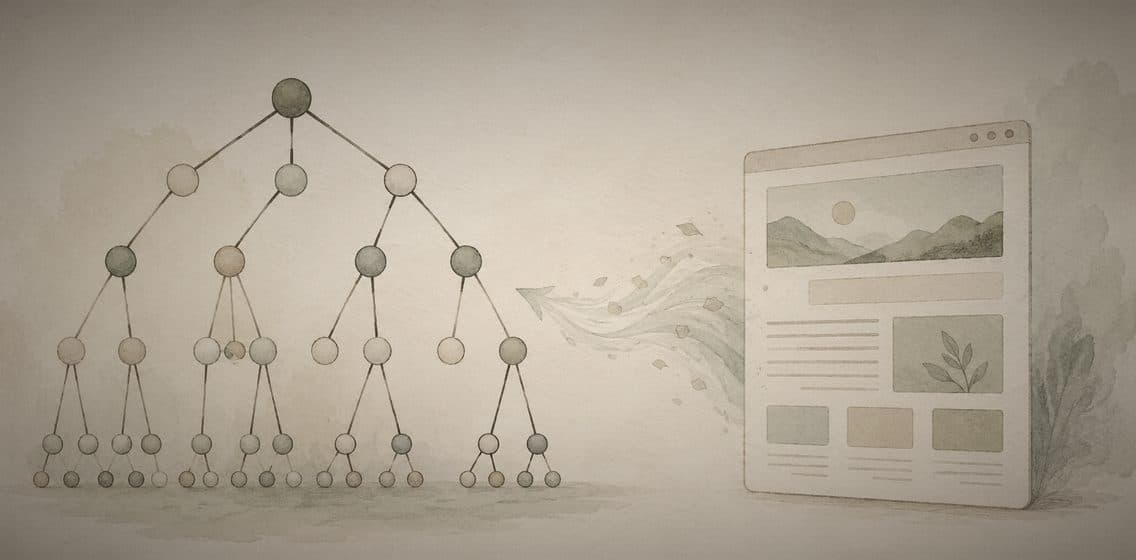
Think of DOM as part of the doorway between a person and a machine. People see the door — the page that loads, the button that responds — and barely notice the hinges. DOM is one of the hinges.
Where it shows up
You meet DOM in almost every website, app, and dashboard. The piece itself is invisible; what you notice is the page that loads, the field that updates, the screen that fits the phone in your hand.
A small example
Imagine the scene above. The role DOM plays is the one its blurb describes — The live, in-memory tree of a web page. Every time a page loads or a button fires a request, ideas like this are quietly doing the work between the browser and the server.
Common misunderstanding
One line to take with you
DOM is part of the surface between people and machines. The user sees the result, never the seam.